Overfitting: The Model That Knows Everything and Predicts Nothing
 C. Pearson
Your model has a 98% accuracy score. You show it to your team. Everyone's impressed. You deploy it.
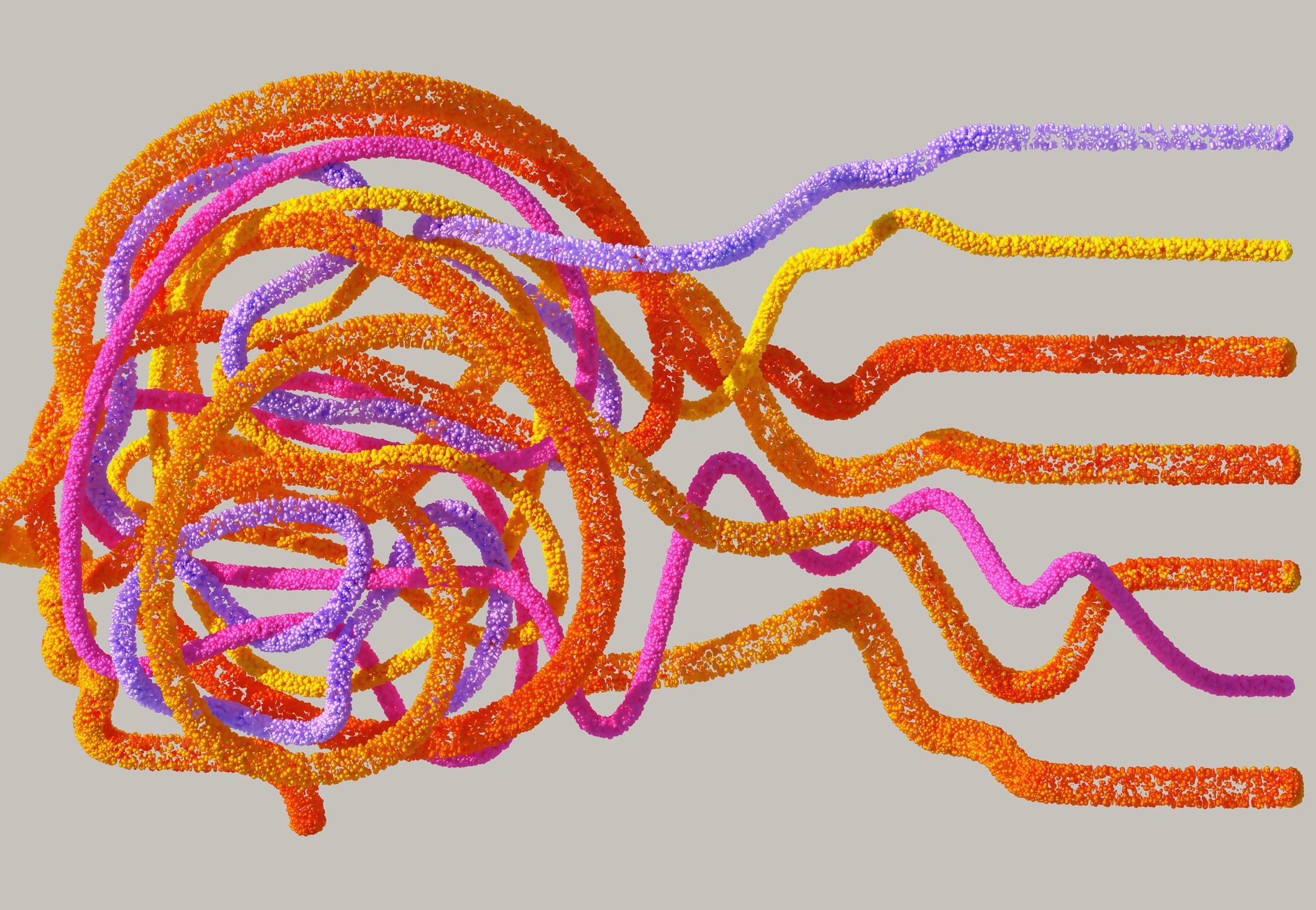 Photo by Google DeepMind on Pexels.
Then it falls apart on real data. Not a little, catastrophically.
Welcome to overfitting: the statistical equivalent of memorizing every answer on a practice exam and then completely blanking when the wording changes slightly.
What Actually Happens When a Model Overfits
Every dataset has two components: the true underlying signal you actually care about, and noise, random garbage that's specific to your sample. An overfit model doesn't just learn the signal. It learns the noise too. Every outlier, every quirk, every coincidental pattern that exists in your training data gets baked into the model like it's meaningful.
The result is a model with outstanding memory and terrible judgment.
Think of it this way. You're trying to build a model that predicts house prices. Your training data happens to include three houses on Elm Street that sold unusually high because of a bidding war. An overfit model notices that Elm Street addresses correlate with high prices, not because it's actually true, but because that noise showed up in the sample. The model has learned a ghost.
Out in the world, Elm Street houses sell for normal prices. Your model looks like an idiot.
The Bias-Variance Tradeoff You Can't Ignore
Here's the uncomfortable physics of prediction: you can't minimize both bias and variance simultaneously. Every modeling decision you make trades one off against the other.
Bias is systematic error, when your model is too simple to capture real patterns. A straight line fitted to curved data. High bias means the model is wrong in a consistent, predictable direction.
Variance is sensitivity to the specific data you happened to train on. High variance means: change the training sample slightly, get a wildly different model. That's overfitting.
Crank up model complexity, add more features, deeper trees, more polynomial terms, and you drive bias down. But variance climbs. The model starts chasing noise.
Simplify the model, fewer features, stronger regularization, and variance drops. But now you might be too blunt to capture genuine structure. Bias rises.
There's no free lunch. The goal is finding where the total error, bias squared plus variance, is minimized. Not where training accuracy is maximized.
graph TD
    A[Increase Model Complexity] --> B(Lower Bias)
    A --> C(Higher Variance)
    D[Decrease Model Complexity] --> E(Higher Bias)
    D --> F(Lower Variance)
    B --> G{Sweet Spot: Minimize Total Error}
    F --> G
Why Training Accuracy Is a Lie
If you evaluate your model on the same data you trained it on, you will always get an optimistic number. Always. The model has already seen that data. Asking it to predict training examples is like grading a student on questions they've already answered.
This is why cross-validation exists, and why people still skip it because it feels like extra work. In k-fold cross-validation, you split your data into k subsets, train on k-1 of them, and test on the one you held out. Repeat for each fold. The validation scores you get are honest; they reflect performance on data the model hasn't seen.
A gap between training performance and validation performance is the smell of overfitting. The bigger the gap, the worse the problem.
The Cures Are Boring, and That's the Point
Regularization, early stopping, cross-validation, pruning, dropout, none of these are exciting. They're all variations on the same idea: deliberately constrain the model's ability to memorize. Force it to find patterns that generalize rather than patterns that fit.
L1 regularization (Lasso) pushes coefficients toward zero and can zero them out entirely, a built-in feature selector. L2 regularization (Ridge) shrinks coefficients without eliminating them. Both add a penalty term to the loss function that punishes complexity.
More data also helps. Noise is idiosyncratic; signal is consistent. As sample size grows, the signal-to-noise ratio improves, and a model has a harder time fitting noise patterns that only appear in small samples.
What doesn't help: running your model on the test set repeatedly until performance looks good, then reporting that number. That's overfitting to your test set. You've just burned the one honest evaluation you had.
The Uncomfortable Truth
A model that performs slightly worse on training data but holds up on new data is worth infinitely more than a model with a flashy training score that collapses on contact with reality.
The goal was never to explain your training data. The goal was to predict something you haven't seen yet.
Your model knowing everything about the past while predicting nothing useful about the future, that's not success. That's just expensive memorization.
Get Mean Methods in your inbox
New posts delivered directly. No spam.
No spam. Unsubscribe anytime.